55% of the Amazon may be lost by 2030
But carbon-for-conservation initiatives could slow deforestation

|
|
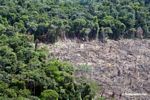
(01/23/2008) Cattle ranching, industrial soy farming, and logging are three of the leading drivers of deforestation in the Brazilian Amazon. As commodity prices continue to rise, driven by surging demand for biofuels and grain for meat production, the economic incentives for developing the Amazon increase. Already the largest exporter of beef and the second largest producer of soy - with the largest expanse of "undeveloped" but arable land of any country - Brazil is well on its way to rivaling the U.S. as the world's agricultural superpower. The trend towards turning the Amazon into a giant breadbasket seems unstoppable. Nevertheless the decision at the U.N. climate talks in Bali to include "Reducing Emissions From Deforestation and Degradation" (REDD) in future climate treaty negotiations may preempt this fate, says Dr. Daniel Nepstad, a scientist at the Woods Hole Research Institute.
[
Amazon | Brazil | REDD]
U.S. biofuels policy drives deforestation in Indonesia, the Amazon
|
|
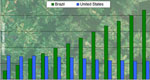
(01/14/2008) U.S. incentives for biofuel production are promoting deforestation in southeast Asia and the Amazon by driving up crop prices and displacing energy feedstock production, say researchers. The best hope for mitigating these damages may lie in the development of next generation of biofuels, specifically feed stocks derived from farm waste, weedy grasses (switchgrass, miscanthus), and fast-growing trees (poplar, sweet gum). Scientists say such "second generation" biofuels offer a higher net energy balance with lower greenhouse gas emissions. Further, such feed stocks can be grown with fewer fertilizer and pesticides, and are viable on marginal agricultural lands so they don't compete with food crops.
[
Biofuels | United States]
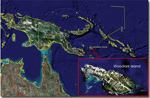
Palm oil developer abandons plan to log 70% of Woodlark Island
(01/14/2008) Vitro Plant, a developer that planned to log 70 percent of Papua New Guinea's Woodlark Island for oil palm plantations, has pulled out of the project reports The National. The apparent withdrawal could not be independently confirmed, but The National reports that PNG's Department of Agriculture and Livestock was notified of Vitro's intention to abandon the project. The news comes after an international campaign by environmentalists who argued the project would endanger the island's unique wildlife and faced widespread local opposition. [Update]
[
Palm oil | Happy-upbeat environmental]
The hidden value of Bali: Why saving the world's rainforests is good for the climate and the US economy

|
|
(01/10/2008) A few weeks ago, over 10,000 politicians, scientists, NGO representatives, and academics inundated Bali, Indonesia. The goal was to negotiate, lobby, and struggle through the increasingly complex web of international climate change policy. At the end of it all an agreement was reached as part of the "Bali Action Plan" to spend two more years negotiating on a future agreement that should include reducing deforestation in developing countries—something that currently accounts for up to 25% of global greenhouse gas emissions.
[
Avoided deforestation | REDD]
An interview with primate researcher Dr. Karen Strier
Conservation of muriqui and Atlantic Forest requires ongoing support

|
|
(01/10/2008) The Atlantic forest of Brazil boasts South America's largest primates, the Southern and Northern Muriqui. The muriqui are unique among all primates, because they are not territorial and do not display aggressive behavior. The IUCN has classified the Southern Muriqui as endangered, while the Northern Muriqui is critically endangered. Dr. Karen Strier has studied the Northern Muriqui in the field for twenty-five years. A professor of zoology and anthropology at the University of Madison Wisconsin, she is the author of Faces in the Forest: the Endangered Muriqui Monkeys of Brazil and a new textbook entitled Primate Behavioral Ecology.
[
Brazil | Interviews | Primates]
Sunscreen damages coral reefs
(01/31/2008) Sunscreen can damage reefs by worsening viral infections in symbiotic algae that provide corals with sustenance, reports Nature News.
[
Coral reefs]
Global warming worsening U.S. water crisis
(01/31/2008) Human-induced climate change is accelerating a water crisis in the American West, reports a study published this week in the journal Science.
[
Drought | Impact of Climate Change]
Global warming to hurt agriculture in world's poorest regions
(01/31/2008) Global warming will cause severe crop losses in some of the poorest parts of Africa and Asia by 2030, reports a study published in tomorrow's issue of the journal Science.
[
Agriculture | Climate Change]
Scientists suggest new geological epoch: ours
(01/30/2008) It would be called the Anthropocene. The word was coined by chemist and Nobel Prize winner Paul Crutzen at a conference in 2000. It denotes a new geological epoch, beginning about 200 years ago at the time of the Industrial Revolution, when our planet's systems were increasingly affected by our species. While the term Anthropocene has been used informally for years, a recent peer-reviewed British paper argues that it is now time to officially accept Anthropocene as a distinct era and to leave the Holocene to the pre-Industrial past.
[
Climate Change]
Forests Finally Emerging as Climate Issue
(01/30/2008) The representatives of more than 100 countries in attendance at December's U.N. climate conference in Bali, Indonesia, finally focused on the important role tropical forests play in global warming.
[
REDD]
New research refutes global warming's influence on amphibians' worst enemy
(01/30/2008) There is no doubt that global warming is having a negative effect on amphibians, but it is yet unclear whether or not a direct causal relationship exists between global warming and the spread of a specific fungal epidemic wreaking havoc on amphibian populations worldwide.
[
Amphibians | Biodiversity]
Forest copper mine triggers controversy in Armenia
|
|
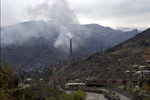
(01/28/2008) In Northern Armenia, a company has been given the go-ahead to establish a copper mine in Teghut Forest sparking a struggle between industry and environmentalists. Teghut Forest spans approximately 29,000 square kilometers--the size of the English channel--and supports a large number of Armenia's native species, including the Syrian Brown Bear and the Short-toed Eagle. The mine will be operated by Armenian Copper Program (ACP) and will be the largest mine in Armenia. Environmentalists believe that the mine will cause large and lasting damage to the region, while government and industry state that the mine's environmental impact will be small while giving the region an economic boost.
[
Europe | Forests]
How much would it cost to end Amazon deforestation?
(01/28/2008) With Brazil last week announcing a significant jump in Amazon deforestation during the second half of 2007, the question emerges, how much would it cost to end the destruction of Earth's largest rainforest?
[
Amazon | Brazil | Deforestation]
7000 sq km of Amazon rainforest destroyed in late 2007 says Greenpeace
(01/25/2008) Brazilian government figures will likely show that more than 7,000 square kilometers of Amazon rainforest were destroyed between August and the end December 2007, said environmental group Greenpeace.
[
Amazon | Brazil | Deforestation]
Groups call for doubling of reef protection for International Year of the Reef
(01/25/2008) Thursday 17 countries and 30 organization launched the International Year of the Reef, a campaign to protect coral reefs increasingly threatened by climate change, pollution, and unsustainable activities.
[
Coral reefs]
Amazon deforestation jumps in the second half of 2007
|
|
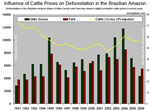
(01/24/2008) Deforestation in the Brazilian Amazon rose sharply in the second half of 2007 as a result of surging prices for beef and grain, said a top Brazilian environmental official. Speaking in Brasilia, Gilberto Camara, head of the National Institute for Space Research (INPE), which tracks deforestation in the Amazon via satellite, said that 3,235 sq km of rainforest was destroyed between August and December 2007 and warned that the preliminary figure was likely to double as satellite images with higher resolution are analyzed.
[
Amazon | Brazil | Deforestation]
The Dark Side of Biofuels
(01/24/2008) Mongabay.com's Rhett Butler talks with Chicago Public Radio's Jerome McDonnell, host of Worldview, on the impact of U.S. biofuels policy on deforestation in the Amazon [minutes 22:15-38:00 on the podcast].
[
Chicago Public Radio]
Sustainability mandated for biofuels used in the EU
|
|
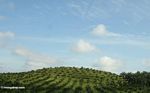
(01/24/2008) Biofuels used in the European Union will have meet strict environmental requirements said the head of the E.U.'s energy program on Wednesday. At a news conference in Brussels, European Energy Commissioner Andris Piebalgs said the E.U. was considering four criteria to ensure biofuels were environmentally sustainable including a 35 percent carbon dioxide emissions savings compared with conventional fossil fuels, a production ban on "land of high biodiversity" and land with high carbon stocks, and requisite use of best agricultural practices.
[
Biofuels | Europe]
Largest body of earth scientists issues warning on global warming
|
|
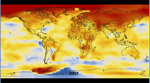
(01/24/2008) A statement newly released by the world's largest scientific society of Earth and space scientists--the American Geophysical Union, or AGU--updates the organization's position on climate change: the evidence for it, potential consequences from it, and how to respond to it. The group says that "Earth's climate is now clearly out of balance and is warming."
[
Climate change]
Malaysian timber firm fined for illegal rainforest logging in Guyana
(01/22/2008) Barama Company Limited, a subsidiary of the Samling Group, a Malaysian logging firm, has been fined for violating Guyana's forest laws, reports Staebroek News. Barama operates the largest timber concession in Guyana.
[
Guyana | Logging]
New Jersey scraps plan to buy Amazon rainforest timber
(01/22/2008) The city council of Ocean City in New Jersey voted 6-0 last Thursday to cancel a $1.1 million purchase of ipe timber originating in the Amazon rainforest.
[
United States | Amazon | Logging]
Border fence may drive largest American cat to extinction
(01/22/2008) The Bush Administration's decision to not prepare a recovery plan for the endangered jaguar in its native habitat in Arizona and New Mexico may spell the end for the big cat in the United States, says an environmental group.
[
United States | Politics | Endangered species | Big cats]
Rich countries grow at ecological expense of poor countries
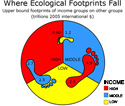
(01/21/2008) The costs of environmental degradation caused by rich countries are disproportionately falling on the world's poorest countries, reports an analysis published in the journal Proceedings of the National Academy of Sciences. Tallying the environmental costs of climate change, stratospheric ozone depletion, agricultural intensification and expansion, deforestation, overfishing, and mangrove conversion from human activities over 1961-2000, University of California Berkeley researchers led by Pacific Ecoinformatics lab scientist Dr. Thara Srinivasan found total damages ranged up to $47 trillion in net present value. More importantly, Srinivasan and colleagues show that environmental damages like climate change and ozone depletion have been "overwhelmingly driven" by emissions from middle- and high-income groups, but the impacts are disproportionately borne by low-income nations.
[
Economics | Pollution]
100 most threatened amphibians named

|
|
(01/21/2008) Due to numerous factors—including habitat destruction, pollution, climate change, and chytrid fungus—amphibians are probably the most threatened taxon in the world, with more than one-third of species at risk of extinction. To help save these species on the brink, EDGE, a part of the Zoological Society of London, has compiled a list of the hundred most threatened and evolutionary distinct amphibians. For this year, EDGE has chosen ten amphibians to receive immediate conservation attention
[
Amphibian crisis | Extinction]
New program pays Canadians for energy efficiency gains
(01/20/2008) In Canada, the ecoENERGY Grant program exists to provide monetary incentives to home owners to undertake an energy efficiency evaluation of their home and act on its energy conservation recommendations.
[
Canada | energy]
Two-thirds of captive-bred carnivores die when released in the wild
(01/20/2008) Carnivores reintroduced to the wild as part of conservation programs fare poorly, reports a new study published online in the journal Biological Conservation.
[
Animals | Conservation]
Recovery from worst mass extinction took 30M years
(01/20/2008) The recovery of complex ecosystems following history's worst mass extinction took 30 million years reports a study published last week in Proceedings of the Royal Society B.
[
Extinction]
Palm oil industry prepares geen initiative to counter criticism
(01/18/2008) Global food and consumer goods giants are backing a plan to certify that palm oil is produced in a way that doesn't drive destruction of tropical rainforests, reports The Wall Street Journal. The move comes as the palm industry is facing increasing scrutiny -- and consumer backlash -- for its practices which scientists say are driving large-scale destruction of forests across Indonesia and Malaysia, resulting in massive greenhouse gas emissions.
[
Palm oil]
Invasive species hurt developing world economies
(01/18/2008) The 'real' costs of invasive species are underestimated in developing countries, argues a new report that calls for more research into the environmental, social and economic impact of non-native plants and animals.
[
Invasive species]
To reproduce, parasite transforms ant into juicy red berry
(01/17/2008) Scientists have discovered a parasite that transforms the appearance of its host, an ant, into that of a juicy red berry that birds are more likely to eat and disperse into new habitats, reports an article published in The American Naturalist. It is the first example of fruit mimicry caused by a parasite, say the researchers who discovered the parasite, a nematode or roundworm found in the canopy of tropical forests ranging from Central America to the lowland Amazon.
[
Biodiversity | Ecological beauty]
Amazon deforestation surging due to oil, soy prices
|
|
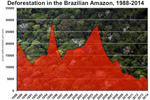
(01/17/2008) A Brazilian scientist has confirmed that forest clearing in the Amazon rainforest has surged in recent months, according to Reuters. Carlos Nobre, a scientist with Brazil's National Institute for Space Research, which tracks Amazon deforestation, told a seminar in Washington that deforestation "is going to be much higher than 2007."
[
Amazon | Deforestation]
80% of world's undernourished children live in 10% of countries
|
|
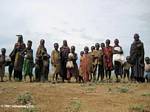
(01/17/2008) Worldwide, undernutrition is responsible for more than a third of all deaths of children under the age of five. If a child survives past this age, he or she is much more likely than a child adequately nourished to demonstrate lower educational achievement, be of below-average height, and give birth to smaller infants.
[
Poverty]
Tropical islanders win battle against palm-oil
Confirmation that Woodlark Island will remain free of palm-oil development
|
|
(01/16/2008) Mongabay has confirmed that the Milne Bay government has pulled plans to allow Vitroplant to log 70% of Woodlark Island for palm oil plantations. The Minister for Agriculture and Livestock, Hon John Hickey, stated in a press release that "Vitroplant did do a feasibility study and were keen to invest on the island. However due to landowner objections on the development of the oil palm industry on the island, the company has decided to pull out." Vitroplant has yet to comment.
[
Palm oil | Happy-upbeat environmental]
Global warming will diminish fish catch in the Bering sea

|
|
(01/16/2008) One half of the fish caught in the U.S. annually--and almost a third worldwide--come from the Bering Sea. Yet, this vast resource is increasingly threatened by climate change. A recent study, published in Marine Ecology Progress Series, showed that global warming will greatly affect the Bering Sea's phytoplankton, the cornerstone of the sea's rich ecosystem.
[
Oceans | Fishing | Impact of climate change]
Cellulosic ethanol production could fight Gulf Dead Zone, help fisheries
(01/16/2008) Feedstocks for cellulosic ethanol production could help fight the massive "dead zone" that forms each year in the Gulf of Mexico as a result of current farming practices, says a University of Alabama in Huntsville biologist.
[
Biofuels | Cellulosic ethanol]
Climate change causes shift in American bird ranges
(01/16/2008) Breeding ranges of North American birds have shifted northward coinciding with a period of increasing global temperatures, report researchers writing in the April issue of Conservation Biology.
[
Birds | Impact of climate change]
Rainforest site updated
(01/15/2008) The tropical rainforest section has been updated to better interface with recent news articles. Providing tropical forest news, statistics, photos, and information, rainforests.mongabay.com is the world's most popular rainforest information site. In coming months, the site will become available in Chinese, French, Japanese, Portuguese, and Spanish. A children's version of the site is presently available in 24 languages.
[
Rainforests]
Sierra Leone bans timber exports
(01/15/2008) Sierra Leone has re-imposed a timber export ban after accusing foreign companies of illegally logging its forests, according to BBC News.
[
Africa | Logging]
Indonesia seeks to cut fuel subsidies via biofuels
(01/15/2008) Biofuels will make up 10 percent of Indonesia's fuel transport consumption by 2010 under a plan announced Monday by a senior government official, according to Reuters. The initiative could ease the economic impact of fuel subsidies — currently some of the highest in the world — in Indonesia, while boosting demand for locally produced bioenergy crops including palm oil, jatropha, sugar cane and cassava.
[
Biofuels | Indonesia]
E.U. may ban palm oil biodiesel
(01/15/2008) The E.U. may ban imports of certain biofuel feedstocks that damage the environment, reports The New York Times. While Europe aims to supply 10 percent of all vehicle fuel from biofuels by 2020, environmentalists say some biofuels like palm oil are driving the destruction of biologically-rich rainforests and may produce more emissions than conventional fossil fuels.
[
Biofuels | Palm oil]
Twenty million dollars to protect endangered hotspots
(01/14/2008) Conservation International and the World Bank have signed an agreement for 20 million dollars of funding to protect bio-diverse hotspots. Ten new conservation projects will be funded, including programs in Micronesia, Polynesia, the Caribbean, the Mediterranean Basin, and temperate forests in South Africa. The funds are being provided by the Global Environmental Facility, which brings together 178 governments to support global environmental initiatives.
[
Conservation]
Scientists discover four species of anole lizards in 24 hours in Panama
|
|
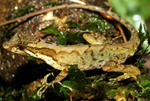
(01/14/2008) In January of 2006 a biological expedition uncovered four anole species in a single day. Dr. Gunther Koehler, a member of the expedition, described the discoveries as "a once in a life time experience; during expeditions before, we had found new species, one at a time—but four species within 24 hours, that was incredible!"
[
Panama | Species discovery]
China bans plastic bags
(01/14/2008) In effort to stem plastic pollution, China has banned stores from using flimsy plastic bags and is mandating an additional charge if customers opt for a more durable plastic bag..
[
China]
Starfish invasion threatens world's richest coral reefs
|
|
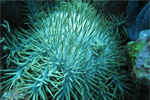
(01/10/2008) Outbreaks of the notorious crown of thorns starfish now threaten the "coral triangle," the richest center of coral reef biodiversity on Earth, according to recent surveys by the Bronx Zoo-based Wildlife Conservation Society and ARC Centre of Excellence for Coral Reef Studies.
[
Animal behavior | Ecological beauty]
Disappearance of elephants, giraffes causes ecological chain reaction
(01/10/2008) The disappearance of elephants, giraffes and other grazing animals from the eastern African savanna could send ecological ripple effects all the way to the savanna's ants and the acacia trees they inhabit, warns a new study published in the journal Science.
[
Animal behavior | Ecological beauty]
Dirt-munching helps protect chimps from malaria
(01/10/2008) Soil ingestion helps chimps protect themselves from malaria, reports a new study published in the journal Naturwissenschaften. Apparently geophagy, as the deliberate behavior is known, "increases the potency of ingested plants with anti-malarial properties."
[
Animal behavior | Primates]
Too early to say if iron seeding will slow global warming - scientists
(01/10/2008) Schemes to use feed the ocean with iron as a way to enhance carbon sequestration from the atmosphere are premature and could be damaging to sea life and marine ecosystems, warns a letter published in the journal Science by an international group of scientists.
[
Carbon sequestration | Geoengineering | Oceans]
Despite Arctic crocodiles, glaciers existed during extreme global warming 90M years ago
(01/10/2008) Massive glaciers extended across 50-60 percent of Antarctica some 91.2 million years even as crocodiles roamed the Arctic and surface temperatures of the western tropical Atlantic Ocean climbed to 37 degrees Celsius (98 degrees Fahrenheit), reports a study published in the journal Science.
[
Climate change | Oceans]
DR Congo has great potential for biofuels says U.N. official
(01/09/2008) A UN economist is touting the potential of DR Congo for industrial biofuels production, reports Reuters. In a telephone interview, Dr Schmidhuber said the worn-torn country could devote millions of acres for oil palm, soy, and other biofuel feedstocks.
[
Congo | Biofuels]
Stanford University, Monterey Bay Aquarium launch center to save oceans
(01/09/2008) Stanford University, the Monterey Bay Aquarium and the Monterey Bay Aquarium Research Institute (MBARI) have teamed up to establish the Center for Ocean Solutions, a new collaboration that will bring together international experts in marine science and policy to find innovative ways to protect and restore the world's oceans.
[
Oceans | Marine Conservation]
Guyana grants 1 million acres of Amazon rainforest to U.S. logging firm
(01/09/2008) Guyana has awarded a 988,4000-acre logging concession to a U.S. forestry company, reports the Associated Press. Simon & Shock International, a company based in South Haven, Michigan, will spend $26 million developing the concession, which lies in the near the Brazilian border. Timber harvesting will commence once the first completes an environmental impact study and a tree inventory.
[
Guyana | Logging]
Paper giant illegally destroying orangutan habitat in Indonesia says WWF
(01/09/2008) In a report released Monday, environmental group WWF has accused forestry giant Asia Pulp and Paper (APP) of illegally logging endangered orangutan habitat on the island of Sumatra.
[
Indonesia | Logging | Sumatra]
Global deforestation data is deeply flawed
(01/08/2008) U.N. data on tropical deforestation does not show a decline in forest cover over the past generation, reports a new study published in the Proceedings of the National Academy of Sciences (PNAS). Examining "all available" forestry data published by the Food and Agriculture Organization of the United Nations (FAO), Dr Alan Grainger, a researcher at the University of Leeds in the U.K., found serious flaws resulting from the aggregation of self-reported of forest figures from individual states.
[
Deforestation]
New York City ends use of Amazon rainforest hardwoods in parks
(01/08/2008) In a meeting with representatives of environmental groups Rainforest Relief and New York Climate Action Group, Parks Commissioner Adrian Benepe unveiled a plan to phase out the use of hardwoods logged from the rainforests of the Amazon, which the agency uses for benches, boardwalks and the decking of bridges in the thousands of parks and areas overseen by the department.
[
Happy-upbeat environmental]
Human activity is killing coral reefs in the Caribbean

|
|
(01/08/2008) A wide and thorough study of the Caribbean's coral reefs—including 322 sites in 13 countries—has shown that the main indicator of coral destruction in the Caribbean is the proximity of human populations: the larger the population the greater the deterioration of the reefs. Contributing factors are numerous, but the study showed that coastal development causes the most damage to coral reefs and fish populations, because of increased sewage and fishing pressure; while proximity to agriculture results in macroalgae due to runoff of agricultural chemicals.
[
Coral reefs]
Switchgrass a better biofuel source than corn
|
|
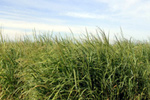
(01/07/2008) Switchgrass yields more than 540 percent more energy than the energy needed to produce and convert it to ethanol, making the grassy weed a far superior source for biofuels than corn ethanol, reports a study published in Proceedings of the National Academy of Sciences (PNAS).
[
Bioenergy | Biofuels | Energy | Ethanol]
Transportation accounts for 15% of global emissions
(01/07/2008) The transport sector accounts for 15 percent of carbon dioxide emissions and 31 percent of ozone released into the atmosphere by humankind, reports a study published in Proceedings of the National Academy of Sciences (PNAS).
[
Carbon dioxide]
'River horses' threatened in Africa
|
|
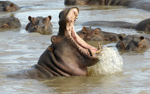
(01/07/2008) As the sun sets on the Luangwa River in Zambia, a male hippo throws its mouth open in a yawn as wide as a canyon. Night is falling as the hippo herds break to the banks to follow their regular paths to their feeding grounds. Their huge, round hooves made muddy imprints during the rainy season, and have dried to concrete craters along a trail the hippos follow to graze in grassy glades.
[
Conservation | Africa | Wildlife]
Scientists propose conservation areas for the unique island of Sulawesi
|
|
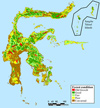
(01/06/2008) Little-known Sulawesi may be the world's most strangely shaped island: with four large peninsulas jutting outward, the island could either resemble a mangled lower-case 'k' or an upside-down emaciated mermaid—depending on one's perspective. However when Dr. Charles Cannon states that the island is "one of the most unique spots on Earth", he is not referring to Sulawesi's shape but its ecology.
[
Conservation | Indonesia | Sulawesi]
Three salamander species discovered in Costa Rica
|
|
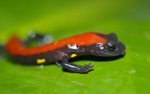
(01/06/2008) Scientists from the Natural History Museum of London have discovered three new species of salamander in south-eastern Costa Rica. This brings the nation's total to forty-three species, meaning that this small tropical nation contains approximately nine percent of the world's salamanders.
[
Species discovery | Costa Rica | Amphibians]
Nature tourism taking a toll in the Galapagos
(01/05/2008) A booming "ecotourism" industry is bringing new threats to the Galapagos, reports a feature in the Wall Street Journal.
[
Galapagos]
Zoos bolster PR strategy to counter criticism after animal escapes

|
|
(01/05/2008) Today's Wall Street Journal features a story on the changing PR strategies of zoos in the midst of animal escapes and attacks like the tiger mauling at the San Francisco Zoo on Christmas Day. The article says that says are increasingly forthcoming in disclosing details about escape incidents and animal deaths
[
http://blog.mongabay.com/]
Rainforest chief killed in Borneo for his opposition to logging
|
|
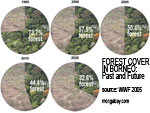
(01/03/2008) Keleasu Naan, a Penan chieftain and longtime activist against logging, disappeared in October while checking animal traps. His tribes' worst fears were confirmed when they found what they believed to be Naan's remains last month. According to the Associated Press, the chieftain's nephew, Michael Ipa, has stated that the body had several broken bones, leading Ipa to believe that "he has been killed by people involved in logging".
[
Asia | Borneo | Indigenous people | Rainforests]
Can China Go and Stay Green?
|
|
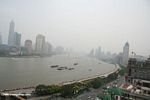
(01/03/2008) China's booming economic growth over the past generation has come at the expense of the environment, putting its economic health at risk, argues a policy piece published in the journal Science. Noting that two-thirds of China's cities face water shortages and 16 of the world's 20 most polluted cities are found within its borders, Jianguo Liu and Jared Diamond argue that while China has set ambitious environmental goals, it has consistently fallen short of meeting them. Liu and Diamond say a major problem is that environmental decisions are made at the national level, but are not enforced by provincial and city leaders, who are unwilling to sacrifice economic growth for environmental gains.
[
Asia | China]
Photo: Pygmy marmoset twins born at the Bronx Zoo
(01/03/2008) Twin pygmy marmosets born to three-year-old mom, Squirt, and seven-year-old dad, King at the Bronx Zoo on November 11 are doing well, according to zoo officials.
[
Photos]
Rising CO2 levels tied to increasing human mortality
(01/03/2008) Rising carbon dioxide levels have been tied to increases in human mortality, reports a study to be published in Geophysical Research Letters.
[
Pollution]
Intel drops support for the "$100 laptop"
(01/03/2008) Intel said it no longer will support the One Laptop Per Child (OLPC) project and resigned from the board over the group's demand that the chipmaker stop selling its Classmate laptop in developing countries.
[
OLPC]
North Atlantic warming not due to climate change
(01/03/2008) While overall temperature in the North Atlantic Ocean has risen over the past fifty years, it has not been consistent across all areas with subpolar regions cooling as subtropical and tropical waters warmed, reports a new study published in the journal Science
[
Oceans]
Carbon uptake by temperate forests declining due to global warming
(01/03/2008) North American forests are storing less carbon due to warmer autumns, reports a study published in the journal Nature by an international team of researchers.
[
Carbon sequestration]
Madagascar increases fines for forest burning
(01/03/2008) Madagascar will increase penalties for people caught setting land-clearing fires on the biodiverse island, according to a report from Deutsche Presse-Agentur.
[
Madagascar]
Butterfly tricks ants into caring for its young
(01/03/2008) A species of butterfly in Denmark fools ants into raising their larvae, reports research published in the journal Science.
[
Animals]
Leading biofuels wreak environmental havoc
|
|
|
(01/03/2008) Biofuels made from world's dominant energy crops -- including corn, soy, and oil palm -- may have worse environment impacts than conventional fossil fuels, reports a study published in the journal Science. Analyzing recent findings from a Swiss government study on 26 types of transport biofuels, Jorn P. W. Scharlemann and William F. Laurance say that arguments in favor of some large-scale biofuels often fail to fully account for the environmental costs of production, including destruction of forests, emissions of trace greenhouse gases, and air pollution.
[
Biofuels]
Orangutan should become symbol of palm-oil opposition
(01/02/2008) In a letter published today in Nature, Oscar Venter, Erik Meijaard and Kerrie Wilson argue that proposals for conservation groups to purchase and run oil palm plantations for the purpose of generating funds for forest protection are unlikely to be successful. The concept was originally put forth by Lian Pin Koh and David S. Wilcove in a 2007 Nature article. Venter and colleagues say that because Indonesian NGOs are too small to fund and operate plantations or parks, they should "combine a range of approaches to conservation, in order to maximize their influence through strategic alliances" with local communities, carbon traders, and the palm-oil industry itself. Reserves should be a secondary strategy for local conservationists, say the authors.
[
Asia | Conservation | Indonesia | Palm oil]
Peru to replant 10 million hectares of forest
(01/02/2008) Peru plans to reforest more than 10 million hectares of logged and degraded forest over the next 10 years according to the country's National Institute of Natural Resources (INRENA). The government hopes the moves will reduce pressure on native forests and bolster the plantation forest industry.
[
Peru]
Jaguar conservation in Brazil's Pantanal
(1/1/2008) Today The New York Times featured an article by J. MADELEINE NASH on conflicts between jaguar conservation efforts and cattle ranchers in the Pantanal.
[
blog.mongabay.com]