(08/28/2006)
Analysts say flash, or solid state memory, drives may soon replace the standard hard drives in laptops. The shift, which features improvements in data performance and durability, may have unexpected environmental benefits as well, with lower energy consumption and reduced use of materials. Is your old computer starting to look a little green with envy?
[
Technology | Green Design]
(08/28/2006)
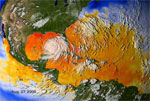
The 2005 hurricane season was the most active on record. While hurricane Katrina was the most devastating, causing 1833 fatalities and over $81 billion in damage, it was not the strongest storm of the year -- both Hurricane Rita and Hurricane Wilma were more powerful. Katrina, which at one point in the Gulf of Mexico was a Category 5 hurricane, was only a Category 3 hurricane when it made landfall near New Orleans on August 29, 2005. Nevertheless, the damage was extensive.
[
Hurricanes | Climate Change]
(08/28/2006)
One-third of China is impacted by acid rain according to officials quotes Sunday by state media. The Associated Press reports that China's factories are sending ever increasing amounts of sulphur dioxide -- the chemical that causes acid rain -- according to Sheng Huaren, deputy chairman of the Standing Committee of parliament. Emissions of sulphur dioxide have risen by 27 percent since 2000.
[
China | Pollution]
(08/25/2006)
Climate change 14 million years ago produced catastrophic drainage of subglacial lakes in Antarctica causing dramatic changes in the continent's landscape according to new research published in the July issue of the journal Geology, The research is significant because it suggests what the future could hold should global temperatures continue to climb. The scientists say that the release of an "enormous, forceful volume" of freshwater, like that which occurred millions of years ago, could impact the stability of the East Antarctic ice sheet and disrupt the Southern Ocean circulation, contributing to regional and global climatic changes.
[
Antarctica | Climate Change]
(08/25/2006)
Spring is arriving earlier across Europe than it did 30 years ago according to new research published in the journal Global Change Biology. Scientists from 17 nations examined 125,000 studies involving 561 species and found that spring is beginning on average six to eight days earlier than it did 30 years ago. The researchers said that in countries where rapid increases in temperature have occurred, "that figure is almost doubled."
[
Climate Change]
(08/25/2006)
Last week I did an interview with treehugger.com, one of the world's most popular environmental web sites. The interview was posted yesterday.
(08/25/2006)
Halfway between South America and New Zealand, in the remote South Pacific, is Rapa. This horseshoe-shaped, 13.5 square-mile island of volcanic origin, located essentially in the middle of nowhere, is "a microcosm of the world's situation," says a University of Oregon archaeologist. Until only recently, little was known about the French Polynesian Island, where the current population is less than 500. Archaeological, linguistic and genetic data suggest that the island, like much of East Polynesia, was inhabited in a final pulse of colonization by seafaring travelers who originated from Island Southeast Asia. New research, led by the University of Oregon's Douglas Kennett, has shed fresh new light on Rapa, especially on what life may have been like for as many as 1,500 to 2,000 people who lived there before the arrival of European explorers.
[
Past Cultures]
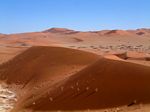
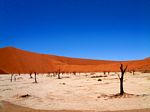
(08/25/2006) Dee Harlow submitted pictures from her travels in the Namib Desert. "Even the ecology of deserts are vulnerable while their significance and beauty are seldom appreciated," she wrote.
[
Travel]
(08/24/2006)
The Philippines has asked for hair clippings from salons and chicken feathers to help fight the country's worst oil spill, according to a report from Reuters. The oil spill occurred August 1 after Solar I, an oil tanker chartered by Petron Corp. sank in rough seas. About 1700 barrels spilled initially, but because the tanker sank in deep water with as much as 15,300 barrels of bunker oil, more is expected to leak into the surrounding environment. According to Greenpeace, about 320 kilometers (200 miles) of coastline -- including a coral reef located in a marine reserve and 27 coastal villages -- have been affected by the spill. The Philippine Coast Guard has appealed for hair and feathers, which have been shown to be highly effective at soaking up oil.
[
Pollution]
(08/24/2006)
A new study suggests that the recovery of biodiversity following the extinction of dinosaurs may have been chaotic with broken ecological links leading to unbalanced plant-insect food webs. With present-day biologists warning that we face an extinction crisis of our own making, the findings may have implications for the present since they indicate that in the event of massive species, biological recovery may more complex than excepted.
[
Extinction]
(08/24/2006)
A new analysis of 50 years of changes in freshwater inputs to the Arctic Ocean and North Atlantic may help shed light on what's behind the recently observed freshening of the North Atlantic Ocean. In a report, published in the August 25, 2006 issue of the journal, Science, MBL (Marine Biological Laboratory) senior scientist Bruce J. Peterson and his colleagues describe a first-of-its-kind effort to create a big-picture view of hydrologic trends in the Arctic. Their analysis reveals that freshwater increases from Arctic Ocean sources appear to be highly linked to a fresher North Atlantic.
[
Climate Change]
(08/24/2006)
New research into climate change in the Western Himalaya and the surrounding Karakoram and Hindu Kush mountains could explain why many glaciers there are growing and not melting. The findings suggest this area, known as the Upper Indus Basin, could be reacting differently to global warming, the phenomenon blamed for causing glaciers in the Eastern Himalaya, Nepal and India, to melt and shrink.
[
Climate Change]
(08/24/2006) A tree that can reach 90 feet in six years and be grown as a row crop on fallow farmland could represent a major replacement for fossil fuels. Purdue University researchers are using genetic tools in an effort to design trees that readily and inexpensively can yield the substances needed to produce alternative transportation fuel.
[
Energy]
(08/23/2006)
As first anniversary of Hurricane Katrina nears, a just-released Zogby poll shows that not only are Americans more convinced global warming is happening, they are also linking recent intense weather events like Hurricane Katrina and this summer's heat wave and droughts to global warming.
[
Climate Change]
(08/22/2006) The Mongabay Kids site (kids.mongabay.com), which aims to help children learn about rainforests and the environment, has been revised for the start of the school year. Dozens of new animal profiles have been added to the site as well as four rainforest photo tours.
[
Kids]
(08/21/2006)
Air pollution exceeds federal standards in nearly 40 percent of America's national parks according to a new report from the nonpartisan National Parks Conservation Association.
[
Pollution]
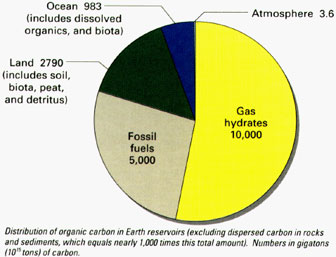
(08/21/2006) Scientists supported by the Integrated Ocean Drilling Program, an international marine research program that explores sea floor sediments and rocks, announced that they found deposits of methane gas hydrates at considerably less depth than expected. The finding is significant because it means that this potential energy source is more accessible than previously believed, presenting the possibility that it could be developed as other fossil fuel sources are diminished in the future. Further, the close proximity of gas hydrate deposits to the sea floor could mean that they are less stable and more susceptible to melting than thought, increasing the risk that massive amounts of methane could be released into the atmosphere should ocean temperatures rise significantly.
[
Climate Change | Energy]
(08/21/2006)
Increasing occurrence and intensity of wildfires due to climate change could worsen mercury pollution in North America according to a new study from researchers at Michigan State University, the U.S. Geological Survey, the National Center for Atmospheric Research, and the Canadian Forest Service. Wildfires are releasing mercury long ago sequestered in Northern wetlands.
[
Pollution | Climate Change]
(08/21/2006) One in three people is enduring one form or another of water scarcity, according to a new report from the International Water Management Institute (IWMI). The assessment, carried out by 700 experts from around the world over the last five years, was released at World Water Week in Stockholm, a conference exploring the management of global water resources. While scarcity figures were higher than previous estimates, the report says that a third of the world's population faces water shortages "not because there is not enough water to go round, but because of choices people make."
[
Water | Poverty Alleviation]
(08/21/2006)
A 25-million-year-old whale fossil from southeastern Australia suggests a curious origin for baleen whales. Presented at the at the Melbourne Museum last week, the fossil shows that earliest baleen whales were small, toothed and highly predatory creatures with enormous eyes -- virtually the opposite of the baleen whales we know today. These, like the blue whale and the humpback are gentle, toothless giants that feed on krill and other tiny organism.
[
Extinction | Biodiversity | Marine]
(08/18/2006) I've added a 120-picture photographic tour of the Amazon ecosystem to the kids' site. The slideshow includes pictures of wildlife, people, and rainforest scenery from across the region, and is now the fourth photographic tour on mongabay.com after rainforests, Gabon and Uganda. More slideshows will be coming soon.
[
Kids | Travel]
(08/17/2006)
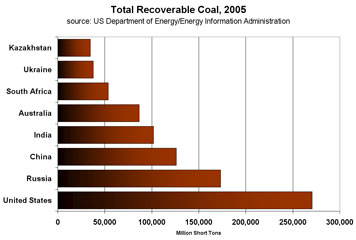
High oil prices are spawning greater interest in technologies that convert coal into liquid fuel, according to an article published yesterday in The Wall Street Journal, but the shift could have a significant impact on the environment. Production and use of a gallon of liquid fuel originating from coal emits about 80 percent more carbon dioxide than the production and use of fuels derived from crude oil. Patrick Barta, the author, writes that "some boosters of the coal-to-oil plants describe them as carbon-dioxide factories that produce energy on the side."
[
Energy | Climate Change]
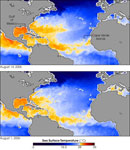
(08/16/2006) A new study says climate change is affecting the intensity of Atlantic hurricanes and that hurricane damage will likely worsen in coming years due to increasing ocean temperatures. Unlike recent studies that have linked higher sea temperatures to an increase in the number of hurricanes, the new research shows a direct relationship between climate change and hurricane intensity. Nevertheless, while Elsner's findings lend support to the contention that warmer temperatures will produce stronger hurricanes, they will not settle long-standing concerns among some scientists. While several studies published since early 2005 have linked recent climate warming to the increasing occurrence and strength of hurricanes over the past thirty years, the research has proved controversial since some scientists say the system for tracking storms is flawed. They argue that storm data from 20 years ago is not nearly as accurate as current hurricane data making it nearly impossible to accurately compare storm frequency and strength over the period. The new paper fails to steer around this controversy since it compares average global near-surface air temperature and Atlantic sea surface temperature with "hurricane intensities" from the National Oceanic and Atmospheric Administration's Atlantic basin hurricane database (HURDAT) over the past 50 years.
[
Climate Change | Hurricanes]
(08/16/2006)
Scientists at the University of Melbourne and La Trobe University have found strong evidence for the cause of the extinction of Australia's giant marsupials some 50,000 years ago. Cold, arid climates of the last ice age have been identified as a likely cause, casting doubt on the alternative hypothesis which blames human hunters.
[
Extinction | Climate Change]
(08/16/2006)
The Associated Press is reporting the discovery of a strange 'Hybrid Mutant' creature in Maine. The animal, described as a 40 and 50 pound animal with "a bushy tail, a short snout, short ears and curled fangs hanging over its lips," was apparently hit by a car as it chased a cat across a rural road in Androscoggin County.
[
Biodiversity]
(08/16/2006)
China disputed charges that it is plundering the world's biodiverse rainforests to meet booming demand for timber, according to the state-run China Daily.
[
China | Rainforests]
(08/15/2006)
A controversial new theory argues that ancient plains Indians may have developed complex tribal social structures far earlier than many researchers believe. Dr. Dale Walde, an archaeologist at the University of Calgary, says that evidence from bison kill sites together with ceramics found in Alberta and Saskatchewan suggests that pressure from agricultural societies from the Midwestern U.S. may have prompted Bison hunters to change their bison hunting strategies and to organize themselves into larger groups.
[
Past Cultures]
(08/15/2006) New research claims that more than half the world's largest forests will be lost if global temperatures rise by an average of 3 degrees or more by the end of the century.The study, published in the current Proceedings of the National Academy of Sciences, says that a warmer climate also increases the risk of extreme floods, forest fires and droughts.
[
Climate Change | Rainforests]
(08/15/2006)
A controversial new theory argues that ancient plains Indians may have developed complex tribal social structures far earlier than many researchers believe. Dr. Dale Walde, an archaeologist at the University of Calgary, says that evidence from bison kill sites together with ceramics found in Alberta and Saskatchewan suggests that pressure from agricultural societies from the Midwestern U.S. may have prompted Bison hunters to change their bison hunting strategies and to organize themselves into larger groups.
[
Past Cultures]
(08/15/2006)
Scientists have successfully bred mice using dead sperm extracted from frozen mice. The research raises the possibility that long-extinct species could one day be brought back to life.
[
Extinction]
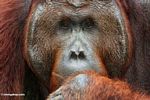
(08/14/2006) Saturday, the Wildlife Conservation Society-Indonesia Program said that Indonesia's population of orangutans fell nearly 43 percent in the past decade, from 35,000 in 1996 to 20,000 today. The decline has been caused by ongoing forest destruction and poaching in Kalimantan (Borneo) and Sumatra, the only two islands that still support wild orangutans. According WCS-IP, in 1996 there were around 35,000 orangutans in Indonesia -- 23,000 in Kalimantan, the Indonesian part of Borneo, and 12,000 in Sumatra, but the massive 1997 forest fires cut the population of orangutans in Kalimantan by about one-third, bringing Indonesia's total population to around 27,000. Since then, continued deforestation has taken a heavy toll of the species which shares 95-97 percent of the genetic material found in humans.
[
Primates]
(08/14/2006)
Dramatic population reductions of a single fish species in a South American river could degrade ecosystem function in an entire river system, according to an article in the Aug. 11 issue of the journal Science.
[
Fish]
(08/12/2006)
Scientists have uncovered new evidence of dramatic changes in humidity, precipitation levels, temperature, and ocean water salinity during a past episode of global warming. Analyzing plant fossils collected in the Arctic, a team of researchers led by Mark Pagani, professor of geology and geophysics at Yale University, found that water and atmospheric water vapor are a major indicator of the greenhouse changes.
[
Climate Change]
(08/11/2006) The drought in the Amazon rainforest looks to be extending into a second year. Last week Brazil's government declared a state of emergency across more than 250 towns in the region due to lack of rainfall. Last year's drought, which left rivers dry, stranded thousands of villagers, and put regional commerce at a standstill, was the worst on record. A second year of drought is of great concern to researchers studying the Amazon ecosystem. Field studies by the Massachusetts-based Woods Hole Research Center suggest that Amazon forest ecosystems may not withstand more than two consecutive years of drought without starting to collapse.
[
Amazon | Rainforests]
(08/11/2006)
The Associated Press reports that 46 people, including 16 agents of the federal environmental protection agency, were arrested for allegedly operating illegal logging operations in the Amazon rainforest and southern Brazil.
[
Amazon | Deforestation]
(08/11/2006)
While biofuels are hyped for their potential to off-set fossil fuel use, the shift toward their use should proceed with caution warns Alan Jope, vice president of consumer products giant Unilever. In an August 7 interview with The Times, Jope said that the environmental drawbacks of biofuels is overlooked.
[
Energy | Deforestation]
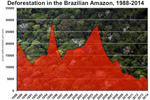
(08/10/2006) Between May 2000 and August 2005, Brazil lost more than 132,000 square kilometers of forest--an area larger than Greece--and since 1970, over 600,000 square kilometers (232,000 square miles) of Amazon rainforest have been destroyed. Why is Brazil losing so much forest? What can be done to slow deforestation? Here's another look at deforestation in the Amazon and some steps that can be taken reduce biodiversity loss in the region.
[
Amazon | Rainforests | Deforestation]
(08/10/2006) Forest fires have a huge impact on human health according to a new study from the University of Alberta in Edmonton, Canada which attempted to put a pricetag on the actual economic losses caused by a 2001 fire that burned 116,000 hectares of forest land and settlements Chisholm, Alberta. The study comes as concerns mount over the potential for forest fires in Indonesia, which are already burning in some areas. Reuters reports that authorities on the islands of Borneo and Sumatra are preparing for choking "haze" resulting from land-clearing fires in the region.
[
Deforestation]
(08/10/2006)
A new analysis of data from twin satellites has revealed that the melting of Greenland's ice sheet has increased dramatically in the past few years, with much of the loss occurring primarily along one shoreline potentially affecting weather in Western Europe.
[
Climate Change]
(08/10/2006)
The most precise record of Antarctic snowfall ever generated shows there has been no real increase in precipitation over the southernmost continent in the past half-century, even though most computer models assessing global climate change call for an increase in Antarctic precipitation as atmospheric temperatures rise.
[
Climate Change]
(08/10/2006)
The most severe low-oxygen ocean conditions ever observed on the West Coast of the United States have turned parts of the seafloor off Oregon into a carpet of dead Dungeness crabs and rotting sea worms, a new survey shows. Virtually all of the fish appear to have fled the area.
[
Climate Change]
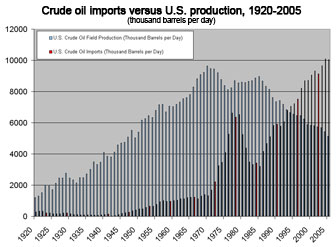
(08/09/2006) The Bush Administration is doing little to treat America's "addiction to oil" according to an article in today's Wall Street Journal. In his January 31 State of the Union address, President Bush said it was time to do something about America's dependence on foreign oil. Rising oil prices and unrest in the Middle East are of growing concern in the United States which leads the world in oil consumption -- the vast majority of which comes from overseas, especially the Middle East.
Nevertheless, The Wall Street Journal says that President Bush is not putting his words into action
[
Energy]
(08/09/2006)
A new technology could help fight climate change by letting carbon-dioxide enzymes do the work. According to Mark Wendman of the UK-based Inquirer a Canadian firm has licensed production rights to an enzyme that scrubs carbon dioxide from smokestacks and other concentrated sources. The byproducts from the CO2 scrubbing process are carbonate and hydrogen gas, which could serve as a fuel source.
[
Climate Change]
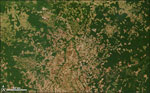
(08/08/2006) Newly released pictures from NASA show deforestation continuing in the Brazilian state of Mato Grosso. The new NASA images show the ongoing transformation of the biodiverse rainforest for pastureland and farms. 60-70 percent of deforestation in the Amazon results from cattle ranches while the rest mostly results from small-scale subsistence agriculture. Despite the widespread press attention, large-scale farming (i.e. soybeans) currently contributes relatively little to total deforestation in the Amazon. Most soybean cultivation takes place outside the rainforest in the neighboring cerrado grassland ecosystem and in areas that have already been cleared. Logging results in forest degradation but rarely direct deforestation. However, studies have showed a close correlation between logging and future clearing for settlement and farming.
[
Rainforests | Amazon]
(08/08/2006) Researchers presenting today at two symposia at the Ecological Society of America meeting in Memphis, Tennessee argue that the rural farmers are not necessarily at odds with efforts to preserve biodiversity in developing countries. Citing case studies in Brazil, Mexico, and other tropical areas, University of Michigan researchers John Vandermeer and Ivette Perfecto suggest that peasant farming practices encouraged by grassroots movements may actually support conservation, while activities by wealthy landowners often undermine it.
[
Rainforests | Biodiversity]
(08/08/2006)
Genetic analysis of living spruce trees suggests that trees cannot migrate in response to climate change as quickly as some scientists believed.
[
Climate Change]
(08/08/2006)
Malaysia is the leading volume supplier of tropical plywood to the United States according to the July 15-31 Tropical Timber Market Report from the International Tropical Timber Organization. In terms of volume of plywood exports to the U.S., China and Indonesia were ranked second and third, respectively.
[
China | Deforestation]
(08/08/2006)
Sooty shearwaters migrate around 65,000 kilometers (39,000 miles) annually according to a new study published in Proceedings of the National Academy of Sciences.
[
Animal Behavior]
(08/08/2006)
Palm trees on Florida's west coast appear to be dying more rapidly than in previous years because of sea level rise tied to global warming. University of Florida scientists who began monitoring a large coastal study area in North Florida in 1992 reported widespread deaths of palms and other trees in low-lying coastal areas in the past. But the latest survey of the waterfront area along the Gulf of Mexico reveals new and unsettling numbers: Of 88 large, mature palms that died at the rural Levy County site between 1992 and 2005, 66 percent, or 58, have died since 2000.
[
Climate Change]
(08/08/2006)
Deep-sea sediments could provide a virtually unlimited and permanent reservoir for carbon dioxide, the gas that has been a primary driver of global climate change in recent decades, according to a team of scientists that includes a professor from MIT. The researchers estimate that seafloor sediments within U.S. territory are vast enough to store the nation's carbon dioxide (CO2) emissions for thousands of years to come.
[
Climate Change]
(08/07/2006)
July was second-hottest month in U.S. history according to the National Climatic Data Center (NCDC). The average temperature for the 48 contiguous states was 77.2°F and more than 2,300 daily temperature records were broken across the country.
[
Climate Change]
(08/07/2006)
Even in the dark, snakes on a plane could keep a close watch on passengers and crew thanks to small cavities near their snouts known as pit organs, according to a forthcoming article published in Physical Review Letters. Physicists at the Technische Universität München believe a network of neurons in the snakes' brains - a kind of snake brain firmware - provides image enhancement as though the snakes were wearing virtual corrective lenses. They discovered that even a crude network dramatically improves infrared imaging.
[
Animal Behavior]
(08/06/2006) In recent months, high fuel prices and national security concerns have sparked interest in biofuels. Cellulosic ethanol, which can be derived from virtually any plant matter including farm waste, looks particularly promising. The U.S. Department of Energy projects that cellulosic conversion technology could reduce the cost of producing ethanol by as much as 60 cents per gallon by 2015. Green groups see cellulosic ethanol as a carbon neutral energy source that could be used to fight the build up of atmospheric carbon dioxide responsible for global warming.
[
Climate Change | Energy]
(08/06/2006)
Tsunami reconstruction efforts are continuing to boost illegal logging and deforestation in Indonesia according to a new article published by the Associated Press. Writer Michael Casey visited the Aceh province on the island of Sumatra. The region suffered the heaviest damage and loss of life from the December 2004 tsunami. Casey writes that the recent peace agreement between Aceh rebels and the Indonesian government has hastened the destruction of the province's biologically diverse tropical rainforests.
[
Deforestation | Rainforests]
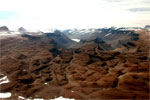
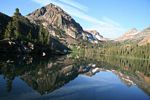
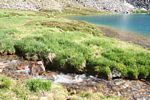
(08/04/2006) Last week I went hiking in Hoover Wilderness Area in Mono County in the eastern Sierra Nevada mountains of California. I took some pictures and have now posted them on the site.
[
Travel]
(08/04/2006) In a talk given last week at the prestigious Royal Society in Britain, the outgoing chairman of Shell Oil said that cleaner-burning coal technologies are urgently needed to minimize greenhouse gas emissions from the ongoing use of fossil fuels in the coming decades. Lord Ronald Oxburgh, non-executive chairman of Royal Dutch Shell PLC from 2004-2005, said that global climate change and the continued use of fossil fuels presents a huge challenge to mankind.
[
Climate Change | Energy]
(08/04/2006)
William Gray and Philip Klotzbach of the Colorado State University hurricane forecast team issued a report today reducing the number of storms expected to form in the Atlantic basin this season. However, the researchers still call for above-average hurricane activity this year and expect above-average tropical cyclone activity in August and September.
[
Hurricanes]
(08/04/2006)
Researchers are calling for tighter controls on the live reef fish trade, a growing threat to coral reefs, in letters to the international journal Science. Twenty of the world's leading marine scientists, including a team from the Department of Zoology, University of Cambridge, have called for action by governments to halt the unsustainable plunder of the world's ocean resources. For decades tropical coral reefs have battled for survival against a complex array of threats including pollution, coral bleaching triggered by rising sea temperatures and over-fishing. In particular, the health of the reefs is being compromised by the live reef fish trade, a serious threat that has prompted scientists to call for tighter regulations on the exploitation of reef resources which are particularly important to developing tropical nations.
[
Marine | Coral reefs]
(08/03/2006)
I have made some changes to mongabay.com. Most obviously, the layout of the homepage has been modified to include topical links to related articles. I have also restarted the weekly newsletter.
(08/03/2006)
Last month scientists from NASA and the University of Maryland, College Park, Md., launched a project to identify possible areas where the thought-to-be-extinct ivory-billed woodpecker could be living.
[
Extinction]
(08/03/2006)
A Washington, D.C., public relations and lobbying firm whose clients include oil company Exxon Mobil may be responsible for a cartoon video that pokes fun at Al Gore according to an article in today's issue of The Wall Street Journal
[
Climate Change]
(08/02/2006) Tuesday, the U.S. State Department issued a statement supporting the "Heart of Borneo" conservation initiative that will protected 220,000 square kilometers of tropical rainforest across Malaysia, Indonesia and Brunei. Secretary of State Condoleezza Rice also announced a pledge of $100,000 to "help advance this regional project focused on combating illegal logging and wildlife trafficking." Borneo, the third largest island in the world, was once covered with dense rainforests, but today these have been reduced to but a shadow of their past extent.
[
Borneo | Rainforests]
(08/02/2006)
While the Bush administration refuses to take legislative steps to fight climate change, 22 of the world's largest cities joined forces Tuesday in a global warming pact aimed at reducing greenhouse gas emissions. Launched by former President Bill Clinton's foundation, the initiative will provide technical assistance to help cities become more energy efficient and allow them to pool their resources to reduce the cost of energy-saving product purchases.
[
Climate Change]
(08/02/2006)
Predators such as jaguar and chimpanzees consistently target smaller-brained prey less capable of escape according to research published in the Royal Society Journal Biology Letters.
[
Animal Behavior
]
(08/01/2006) The great apes are the smartest of all nonhuman primates according to scientists at Duke University Medical Center. The researchers found that orangutans and chimpanzees consistently outperformed monkeys and lemurs on a variety of intelligence tests, conclusively proving that apes (gorillas, chimps, and orangutans) are more intelligent than monkeys and prosimians (lemurs and friends). The results may further the understanding of the evolution of human intelligence.
[
Animal Behavior | Primates
]
(08/01/2006)
In a report released today, scientists call for a new systematic study of the Earth's 'critical zone'--the life-sustaining outermost surface of the planet, from the vegetation canopy to groundwater and everything in between.Understanding and predicting responses to global and regional change is necessary, they say, to mitigate the impacts of humans on complex ecosystems and ultimately sustain food production.
[
Earth Science
]
(08/01/2006)
The $100 laptop may be nearing production after One Laptop per Child (OLPC), the nonprofit group behind the device, confirmed that the governments of four countries are in talks to purchase the machines.
[
Biodiversity | Technology
]
(08/01/2006) Current conservation assessments of endangered Caribbean sea turtles are too optimistic due declines of populations on historically important nesting beaches, according to new research from the Scripps Institution of Oceanography. The researchers estimate that turtle populations have declined significantly since the 17th century, with the number of green turtles living throughout the Caribbean falling from 91 million to 300,000 today and the population of Hawksbill turtles plunging from 11 million to less than 30,000 during this same time period. The change represents a 99.7 percent drop in historic Caribbean sea turtle populations for the two species and the collapse has significant ecological consequences.
[
Biodiversity | Marine | Sea Turtles
]
(08/01/2006)
A startling revelation about the number of different kinds of bacteria in the deep-sea raises fundamental new questions about microbial life and evolution in the oceans.
[
Biodiversity | Marine
]
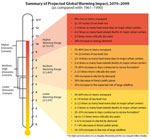
(08/01/2006) A new report from the state of California warns that climate change could have a significant impact on the state's economy and the health of its residents. The report says that global warming will likely cause changes in precipitation patterns and increase air pollution, while rising sea levels will worsen storm damage and put water supplies at risk. It adds that solutions are available today to help California minimize the impact of climate change but that the state's efforts cannot alone mitigate global warming. The release of the report comes on the day that British Prime Minister Tony Blair and California governor Arnold Schwarzenegger signed a climate pact agreeing to reduce greenhouse gas emissions.
[
Climate Change
]